Space, water, privacy and resort-grade amenities — without disappearing off the map. Why a growing share of luxury buyers are looking one hour outside the city, along the St. Lawrence corridor.
For a long time, the prestige address was a downtown one. Proximity to the office, to the restaurant, to the gallery. That definition has not disappeared — but for a certain kind of buyer it has stopped being the whole story. What now signals luxury is often the opposite of density: land, light, water, silence, and the ability to host thirty people at home without booking anything.
Call it strategic country living. Not a retreat from the city, and not a cabin at the end of a gravel road — a deliberate position on the map, close enough to remain connected, far enough to own the things a city lot can never give you.
01
45 minutes
From Montreal and its international airport, by highway in normal conditions.
02
Built 2021
ICF concrete and steel structure — a residence conceived for year-round living.
03
One address
Pool, pool house, golf, marina environment and privacy on a single property.
Space without isolation
The compromise most buyers expect is binary: either you accept a small footprint near the centre, or you accept a long, complicated drive to get real space. Strategic country living rejects that trade. It looks for the narrow band of territory where acreage, waterfront environments and recreation are available, but where the metropolis is still a comfortable drive rather than an expedition.
In Quebec, that band runs along the St. Lawrence — the corridor that has connected Montreal and Quebec City since the very first road network of New France. Lanaudière sits on its northern shore, roughly midway between the two, with Montreal and its international airport reachable in well under an hour by highway in normal conditions.
Isolation is a side effect of country living. It was never the point.
Connected country living
Connected country living is the practical version of the idea. The house is rural in feeling — long views, mature landscaping, no shared walls — and urban in logistics. Flights, hospitals, private schools, restaurants and business obligations remain part of ordinary life, not a weekend project.
That combination is what makes the corridor between Montreal and Quebec City interesting to buyers who are leaving the metropolis but are not leaving their professional lives behind.
A precise geography, not a vague one
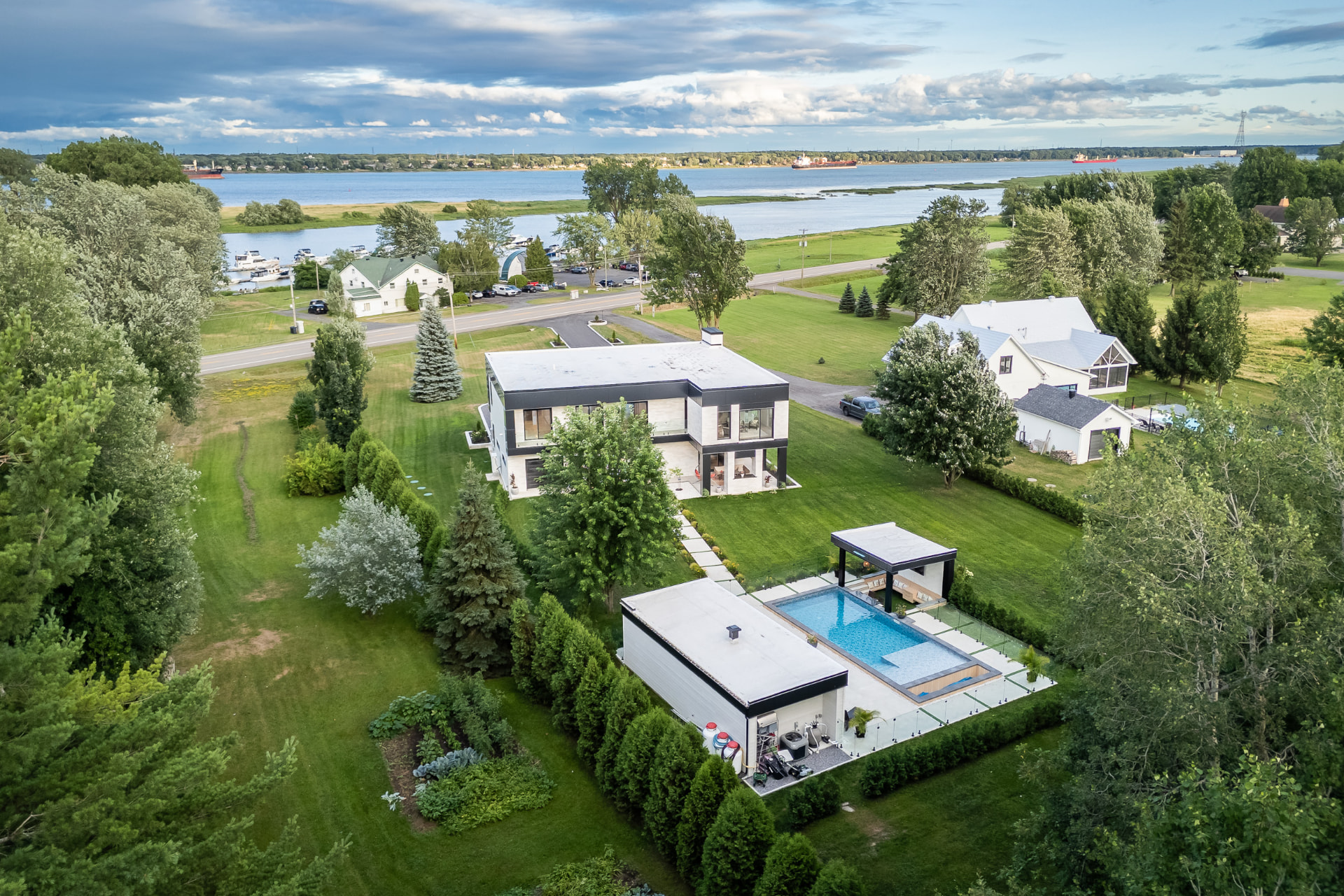
Sainte-Geneviève-de-Berthier is not Montreal, and pretending otherwise helps no one. It is a village in the Lanaudière region of Quebec, on the north shore of the St. Lawrence River, in the corridor that links the province's two largest cities. Its appeal is exactly that: a real place, with a river in front of it, positioned close to everything without being absorbed by it.
When the house becomes the escape
There is a familiar pattern among affluent households: a principal residence in the city, and a second property somewhere with water. Two sets of taxes, two sets of maintenance, two sets of keys, and a Friday afternoon spent in traffic between them.
A newer pattern is emerging. Instead of owning a home and escaping from it, buyers are consolidating: one residence that already contains what the second property was supposed to provide. Why keep a city home and flee it on weekends, when the home itself can be the destination?
This is not an argument against Montreal — a city with few equals in North America for culture, food and walkability. It is an argument about where the centre of gravity of a life sits. For some buyers it belongs downtown. For others it belongs where the pool, the water and the horizon are.
- Pool and pool house — outdoor living that works from May to October
- Golf within minutes, rather than a weekend commitment
- A marina environment for boat owners
- Outdoor kitchen, fireplace, lounge — hosting without leaving home
- Land, distance from neighbours, and quiet as standard equipment
Privacy is becoming a modern luxury
Anything that can be bought easily loses its status. Privacy cannot. It requires land, orientation, landscaping and a location where land is still available — which is precisely what dense, high-value urban markets cannot manufacture.
Privacy also changes how a house is used. A property that is genuinely private becomes autonomous: you entertain on your own schedule, swim without an audience, work from a quiet room, and receive family for a week without renting anything. For buyers coming from Manhattan, London, Geneva or the Plateau, that autonomy is often the single most striking difference.
Resort attributes, residential ownership
What is genuinely new is the expectation. Features that used to belong to a hotel or a private club — a heated pool with a water wall, a pool house with its own bathroom and bar, an outdoor kitchen, a lounge with a fireplace and a screen — are now on the requirement list for a primary residence. Not as decoration, but because they replace the second property.
Villa Océane: the idea, built
Villa Océane is a private residence for sale in Sainte-Geneviève-de-Berthier, and one of the clearest illustrations of this way of living in the region. Built in 2021 with an ICF concrete and steel structure, it was conceived as a year-round residence rather than a seasonal one: four bedrooms, four bathrooms including the pool house, an elevator, and a triple garage of approximately 1,400 sq. ft.
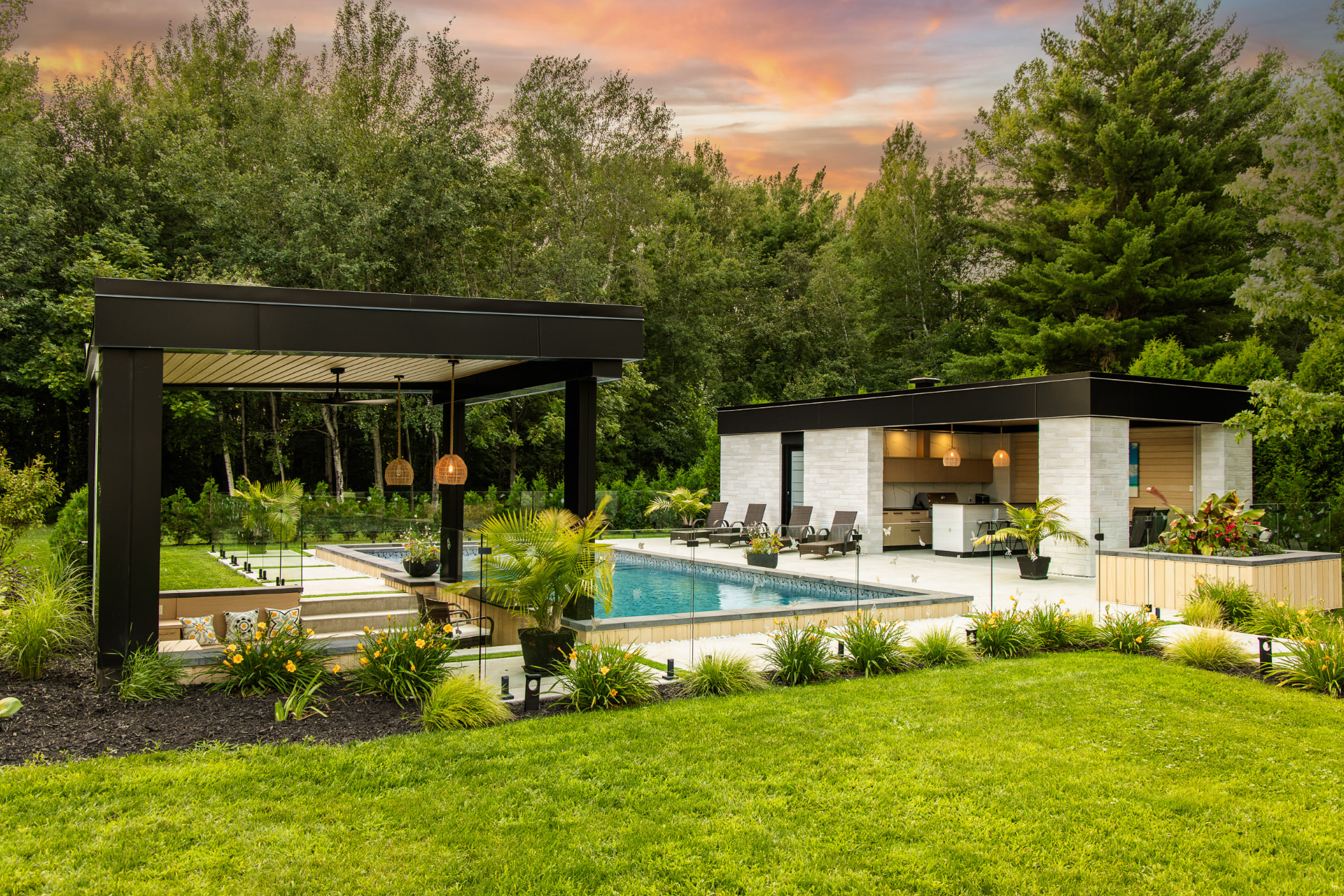
Outside, the grounds behave like a private resort that happens to be yours: a heated in-ground pool with a water wall, a pool house with a pool bar, lounge and guest room, an outdoor kitchen, a fireplace and a screen for evenings that run long. A marina sits immediately across the road, the golf course is minutes away, and the St. Lawrence defines the landscape.
None of these elements is remarkable in isolation. Together, on one property, one hour from a major international city, they are unusual — and that combination is the whole argument for strategic country living.